
Concrete driveway building in Sidney OH - a slab that drains well and stays put
Cracked, sinking or puddling driveway? We dig out, pack the base and pour a new slab planned around what you park on it.
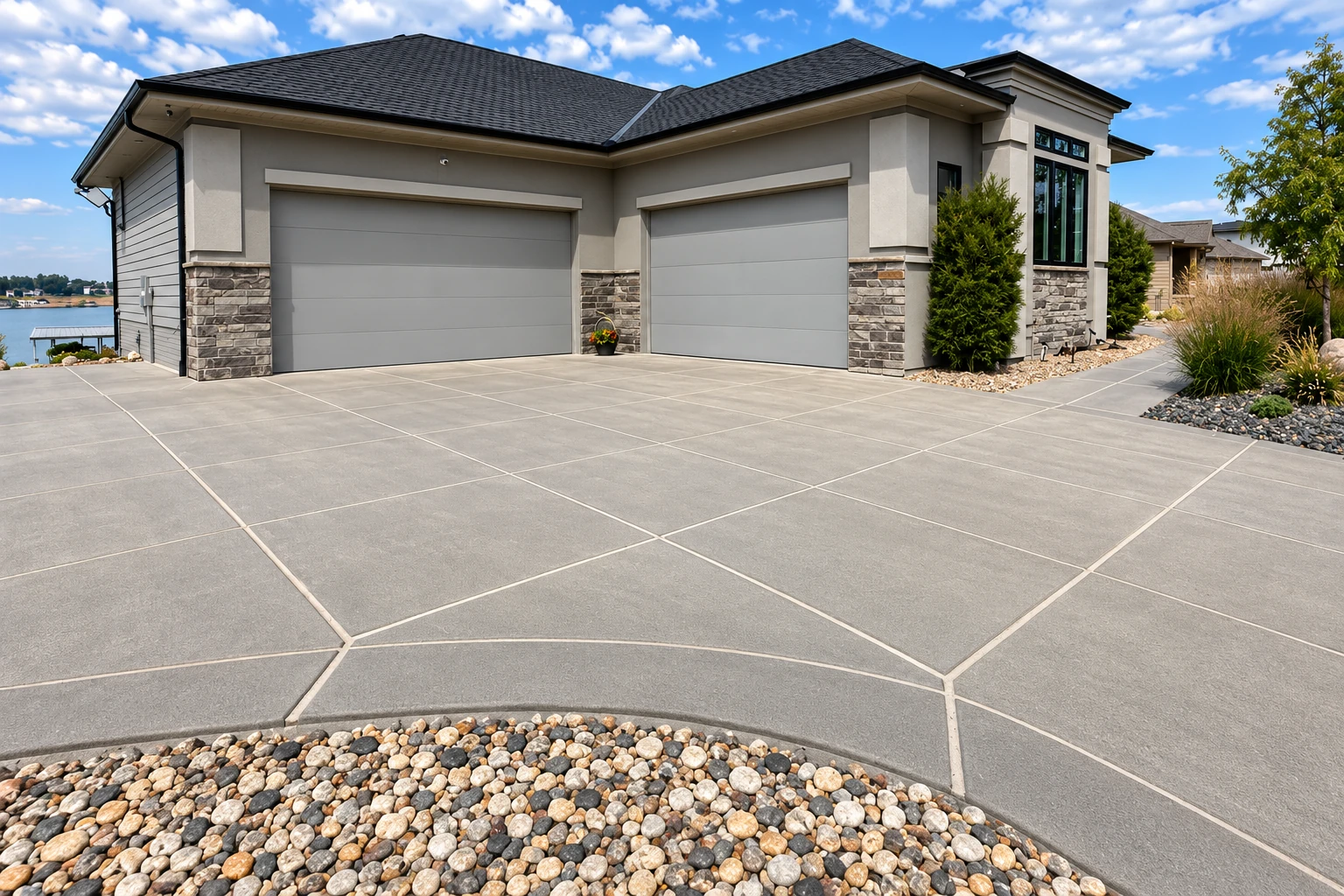
- Fully licensed and insured.
- Free in-person estimates.
- Replies within 1 business day.
What does a new concrete driveway in Sidney involve?
Concrete driveway building in Sidney means removing the old drive, digging out and packing a firm base, and pouring a new slab that sheds water away from your house and holds up through Ohio winters. Most of what decides how long it lasts happens before the concrete truck arrives.
Most people call when the old driveway has cracked through, sunk at the garage or started holding water, and they want to know what it will cost, how long they'll be parking on the street and whether the new one will crack too. The price mostly follows the size, how much old concrete has to come out and how much base work your ground needs. The schedule follows the weather and the season, plus any permit for the work at the street, and your estimate puts in writing what the job includes and what it doesn't.
Is a new concrete driveway right for your home?
Cracked or sinking slab
When the old driveway has broken through or dropped at the garage, patching only buys time.
Water pooling by the house
A driveway that tips toward your garage or foundation needs rebuilding with the slope turned around.
Gravel you're tired of
A gravel drive that ruts, washes out and tracks stones inside is ready for a solid slab.
Heavier parking than before
A new truck, trailer or work rig parked daily deserves a slab planned for that weight.
How we build a concrete driveway
With a driveway, the time of year matters as much as the pour itself, so I talk about timing at the first visit and plan the slab around what you'll be parking on it. On the day, we protect the lawn and the house, haul away the old concrete or gravel and dig down to the subgrade, the soil the slab actually rests on, then pack it firm instead of just raking it level so it can't settle out from under the new concrete. We check where the water runs and set the forms so the slab falls away from the house and garage, add rebar, the steel that holds the slab together if it does crack, where the job calls for it, and pour in the cooler part of the day because midday heat can leave a weak, dusty top. A broom finish, the light ridged texture you see on most driveways, gives tires and shoes some grip when it's wet. We cut control joints, shallow grooves that give the concrete a straight place to crack, before it has a chance to crack on its own, then leave it to cure, since concrete needs that quiet time to gain strength before it carries a car. Before we leave, I go over what the new driveway needs from you during its first winter.
A new driveway is a good time to look at what joins it. Some homeowners add concrete patio construction off the back while our crew is already set up, and if you'd like a border or walkway with more character than plain gray, we can talk through stamped concrete services. Worn front steps at the end of the new walk are worth a look too, and we handle concrete steps construction as well.
Standard slab for cars and SUVs
This suits most homes, because a well-built slab on a packed base handles everyday cars without extra thickness. Going thicker for ordinary parking mostly means paying for concrete you don't need.
Thicker slab for heavy trucks
If a heavy truck or work rig parks on the driveway regularly, extra thickness earns its cost. I ask about this at the estimate so the slab matches how you'll actually use it.
What happens after you call about a new driveway?
Call or send us a message
Tell us your address and what you'll be parking on the driveway. We get back to you to set a time for me to come out.
I walk the driveway with you
I look at the old slab, the grade and where the water goes, and ask how you plan to use the driveway. You get a written estimate that says what the job includes and what it doesn't, so the price holds no surprises.
We sort out permits and timing
Once you're ready, we look into what the office covering your address asks for. Then we schedule the pour with the weather in mind, leaving the new slab enough mild weather before the cold sets in.
We pour, finish and walk it
Our crew protects your lawn and house, and I work alongside them on the forming, pouring and finishing, then tell you how long to stay off the slab, since that depends on the weather while it cures. We walk the finished driveway with you before we call it done.
Where your concrete driveway budget goes first
Into the base, even though you'll never see it.
On the day it's poured, a nicely finished slab and a well-built one look the same, because the base is already buried. That's why base work is the first thing people want to trim, and it's the thing I'd trim last, since a slab sitting on raked dirt settles and cracks right along with that dirt.
Packed native soil usually makes a good base, and we bring in gravel or stone where drainage or soft spots call for it. If the budget is tight, I'd rather keep the base right and go with a plain broom finish now, because a fancier surface can't save a slab that moves.
Examples of concrete work
Have a look through these examples of concrete driveways, patios, steps and slabs to get a feel for finishes and layouts.
Get a written estimate for your new driveway
Please put your address and what you'll be parking on the driveway in the form. We reply within one business day to set a time for a free on-site visit, and the written estimate carries no obligation.
Why Sidney homeowners call Sidney Concrete for driveways
I come out to every job
I look at every driveway myself before it's priced, and I work alongside our crew on the forming, pouring and finishing. The person who walked the job with you is there when the concrete arrives.
Trained on new construction sites
I learned the trade pouring footings, slabs and flatwork, the slabs you walk and drive on, for new houses, and started Sidney Concrete in 2023 to do that same careful work at lived-in homes. So we protect your lawn and house, keep the work area tidy and explain each step in plain words.
Fully licensed and insured
We're fully licensed and insured. That matters at a lived-in home, where our work happens a few feet from your house, your yard and your car.
Based in Sidney, across Shelby County
We're based in Sidney and work across Shelby County and the cities around it, so please ask if you don't see your city listed. Call (937) 658-9414 or use our estimate form to set up a visit.
Driveway questions we hear most
How long does a concrete driveway last in Ohio?
Ohio's concrete industry group says a properly placed concrete driveway can last more than 30 years with little maintenance. The key word is properly, because that long life depends on the base, drainage, joints and timing being done right, and that's where we put our effort.
What is the best time of year to pour a concrete driveway?
The best time is early enough that the new slab gets about two months of temperatures above 40°F before hard freezes are expected, which the same group's guidelines say a new slab should have. The first month is for curing and the second lets it dry out, so we plan your date with that window in mind.
Will my new concrete driveway crack like the old one?
I won't tell you concrete can't crack, but a new driveway is built so cracks land where we choose and the slab stands up to freezing. Driveway concrete is mixed with an air-entraining ingredient that leaves tiny air pockets, which give freezing water room to expand, and the control joints we cut give any crack a straight line to follow. Most of the bad cracking we tear out started with a base that settled, which is why we start there.
Can I use salt on a new concrete driveway the first winter?
No, Ohio's concrete industry guidelines advise against salt or any other deicer during the first winter, especially if the concrete was placed after September 15th and wasn't air dried and sealed. Spread sand for traction instead. For later winters, a national pavement research brief advises using magnesium chloride and calcium chloride salts only when you need them for safety.
Should I seal a new concrete driveway?
Sealing can help, because a water-repellent sealer helps prevent damage from freezing and thawing and from salt, and most good applications work for about two years. The guidelines recommend a curing compound first and the sealer two months later, rather than a one-step product. Some sealers darken the slab, so please ask how the one you're considering will change the look.
How much does a new concrete driveway cost in Sidney?
The cost comes down to your driveway's size, how much old concrete or gravel has to come out, how much base work the ground needs and whether you want extra thickness or a decorative finish. Work at the street, such as the apron and curb cut, adds to it too. I'll give you a written estimate after I've seen the spot, so you know what's included before anything is scheduled.
Ready to plan your new driveway?
I'll walk the spot with you, ask what you'll park on it and put in writing what the job includes.
Other work around the driveway
Concrete driveway building in Sidney: permits and local work
Most new driveways reach the street, and the City of Sidney requires a permit for all work and openings in the right-of-way, the public strip along the street, naming curb cuts and driveways in that rule. The city's list for other permits names work like new buildings, additions and site improvements, so whether the rest of your driveway needs one isn't settled until we check your address. The city registers contractors for all of Shelby County, and its code says you can't let a contractor who hasn't registered with the Building Inspector work on your property in the city, so it's fair to ask anyone you hire, us included. For county properties outside Sidney, permits don't go through the city's online portal, and the city's permit page explains how it handles them. Before we schedule, we check which office covers your address and what it asks for, then take care of the application or help you with the parts that need your signature.
On jobs here we usually find older driveways that have settled at the garage or the street and slabs that send water back toward the house, so we look at grade and drainage before anything else. We see the same on driveway jobs in Piqua and Troy.